Since 2023, we've extracted billions of data points for teams at






Factory is the platform underneath Radar and Benchmark. Describe the data you need in plain English — an agent builds the pipeline, runs it on a schedule, and rebuilds it when the web changes.
Just want the data, not the machinery? See Radar and Benchmark.
What would you like to know?
Agent
▸ probing sources · 3 strategies compared
✓ tesco.com — browser backend
✓ sainsburys.com — http + session
✓ asda.com — browser +37 more
▸ assembling pipeline…
✓ extract — schema locked
✓ clean — GBP · dedupe
✓ deliver — snowflake · slack
✓ validated end-to-end
Pipeline · assembling
✓ 4 steps · 40 sources · validated end-to-end
Grocery Pricing
v1 · live0 rows
| Retailer | Item | Price | Δ |
|---|---|---|---|
| Tesco | Bacardi Carta Blanca 700ml | £12.00 | −20% |
| Sainsbury's | Jack Daniel's 1L | £31.00 | +11% |
| Asda | Absolut Vodka 700ml | £11.75 | — |
| Morrisons | Gordon's Gin 1L | £14.00 | +4% |
| Waitrose | Smirnoff Red 700ml | £13.50 | — |
✓ scheduled daily · 06:00 UTC · alerts → Slack
10+
Fetch backends
10M+
Rows processed monthly
118
Geographies covered
24h
Update cycle
Since 2023, we've extracted billions of data points for teams at
How it works
No scraping scripts, no selectors, no maintenance rota. You describe the outcome — Factory's agents do the engineering.
"Track competitor pricing across 40 grocery sites." Plain English is the whole spec — sources, schema, and cadence are inferred or asked for.
In an isolated sandbox, the agent probes sources, picks fetch strategies, locks a schema, and assembles a multi-step pipeline — then validates it end to end.
Daily, weekly, or on demand. Datasets, dashboards, and alerts are delivered to Slack, Snowflake, PowerBI, Excel, or your API — and shared via live links.
What data do you need?
Competitor Pricing ›
retailTrack product prices across retailers. Compare discounts and promotions.
Insurance Quotes ›
insuranceCompare insurance quotes across providers. Track premiums by persona.
Restaurant Menus ›
foodMonitor menu prices across restaurant chains. Track items and placement.
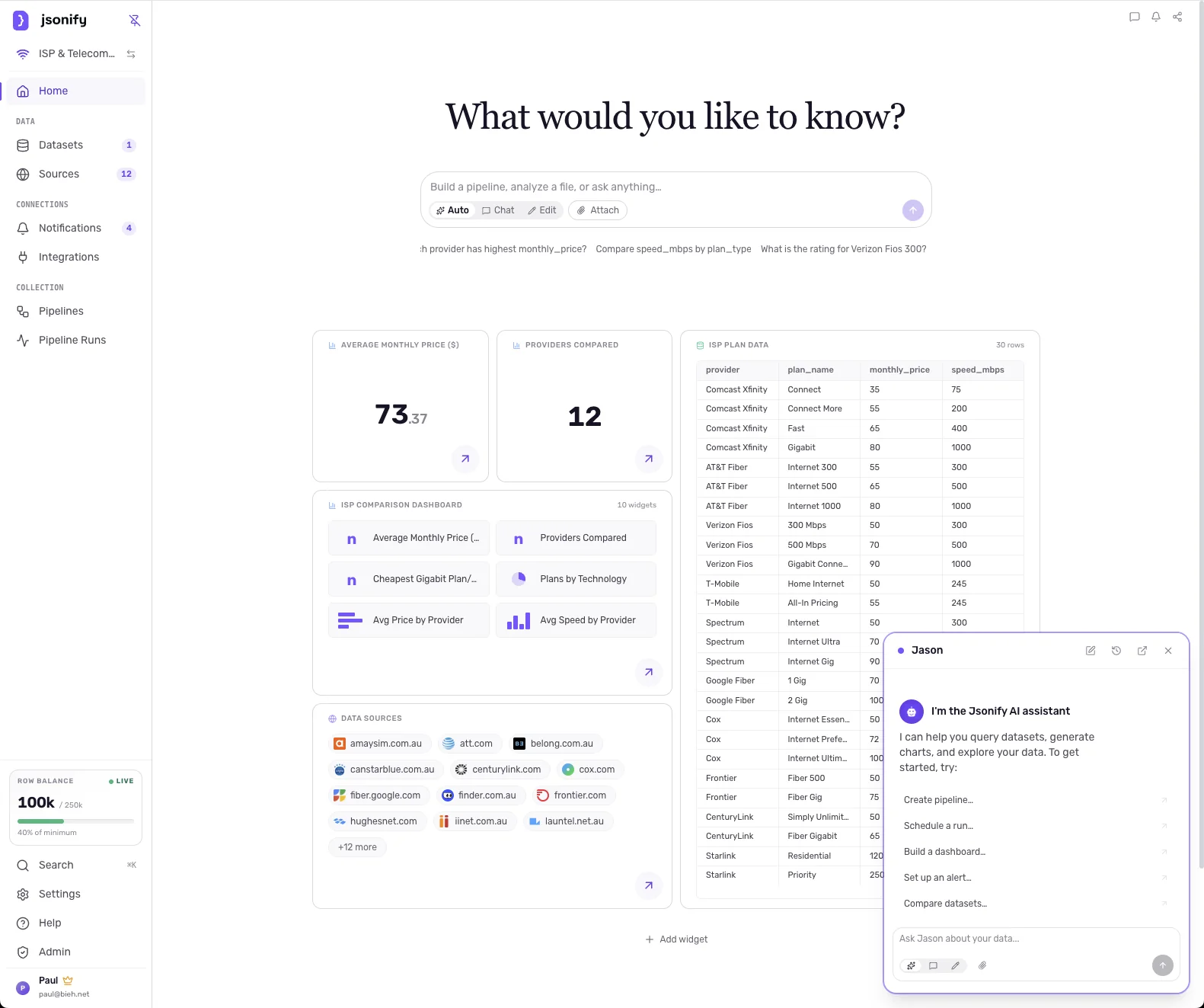
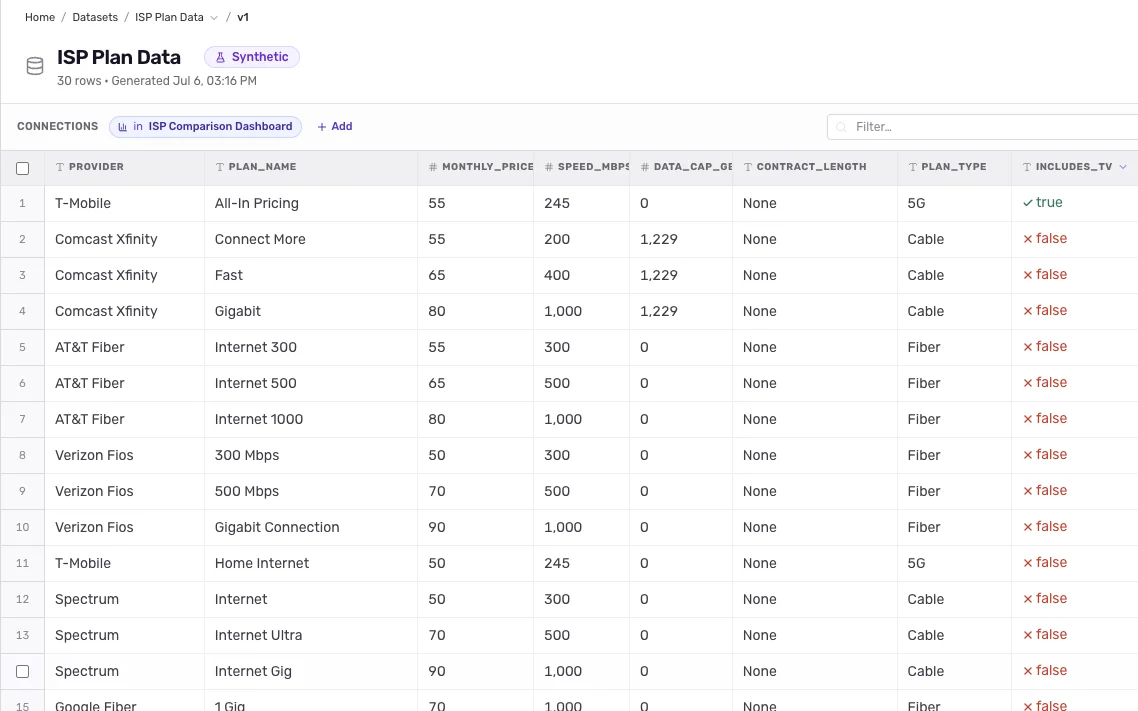
ISP & Telecom Plans ›
telecomCompare internet service plans across providers. Track speeds and pricing.
Property Listings ›
real estateCompare property listings across cities. Track prices and availability.
Custom ›
from scratchDescribe what you need and we'll build it.
The factory floor
Everything Radar monitors and Benchmark simulates is produced by this stack — built once, then run and repaired automatically.
An LLM agent plans the extraction, writes the pipeline, and tests it against real pages — the same work a data engineer would do, in minutes.
10+ backends, from plain HTTP to full browser automation. Factory remembers what works per domain and starts there next time.
Every agent and every pipeline runs in an isolated sandbox — no shared state, no access beyond the job it was given.
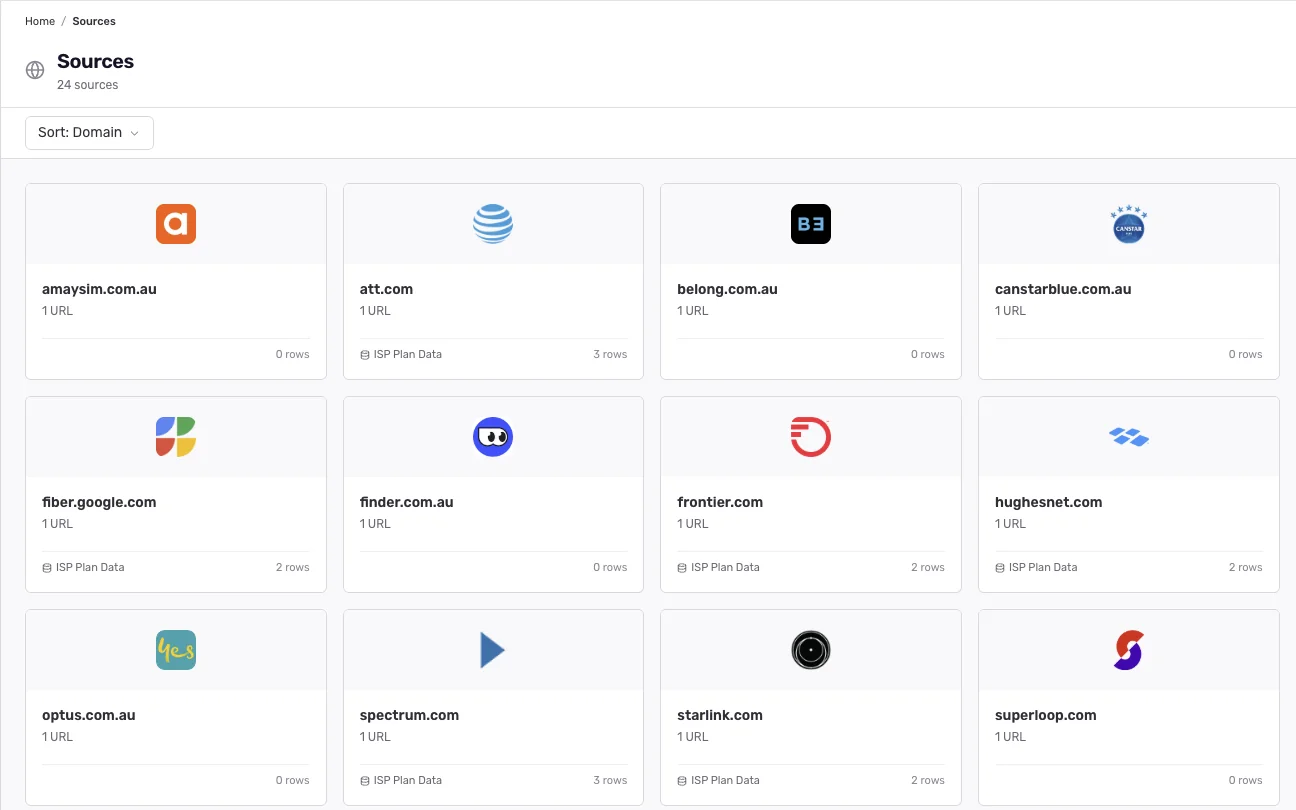
Every value in every dataset traces back to the page it came from. Click a cell, see the source — no "trust us" data.
When a site redesign breaks a step, a healing agent rebuilds just that step and retries the run — before anyone notices.
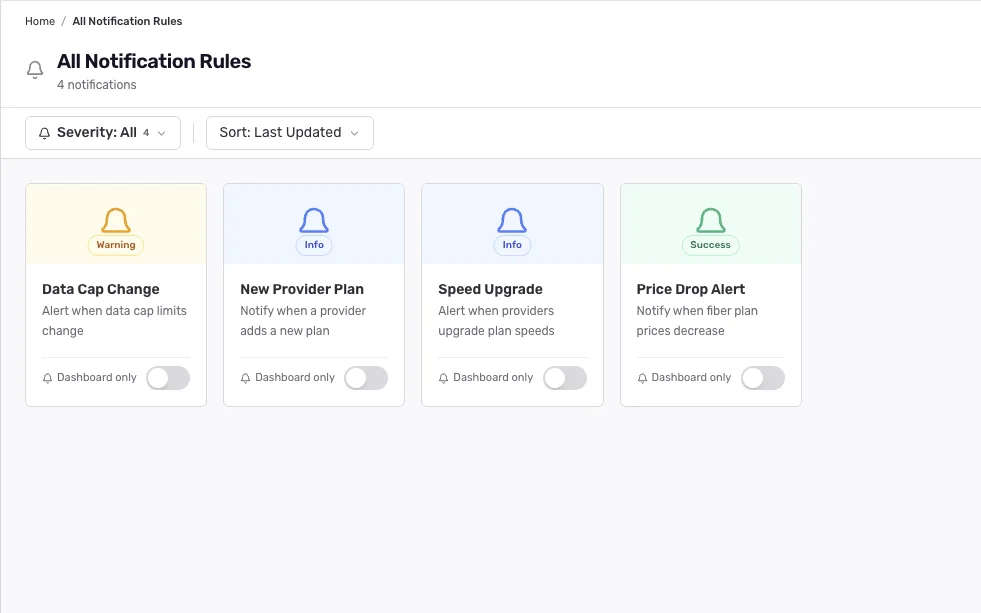
Dashboards, alerts, newsletters, and exports — Slack, Snowflake, PowerBI, Excel, CSV, or API — on the cadence you choose.
Self-healing
Scrapers rot — that's why most teams give up on them. Factory treats a broken step as a job for another agent, not a ticket for your engineers.
Overnight
02:00 run #312 started on schedule
02:14 run failed — tesco.com redesigned their product pages
02:15 heal agent dispatched → sandbox
02:19 extract rebuilt · validated on live pages
02:21 run retried ✓ 1,904 rows delivered
pipeline runs / #312 · Grocery Pricing
No ticket raised. No engineer paged. The morning dataset arrived on schedule.
Meet Jason
Jason is the copilot inside every Factory workspace. Ask him anything about your data and he answers from the live datasets — then acts on what you decide, right in the chat.
Answers from your live data
"Why did prices drop yesterday?" gets a real answer, queried from the dataset — not a canned reply.
Builds and edits pipelines
"Track two more retailers" or "add a promo column" — Jason changes the pipeline, validates it with a sample build, and versions every edit so you can revert.
Runs the delivery side too
Dashboard widgets, alerts, newsletters, scheduled summaries — and when a build or rerun finishes, he reports back in the same thread, in the app or in Slack.
Jason
watching your workspace
Ask Jason about your data…
answers · builds · delivers
Under the hood
You don't have to look inside — but you always can. Every pipeline Factory builds is real, versioned, testable software.
Factory generates Python pipelines — not opaque configuration. Every pipeline is readable, diffable, and reviewable, like any other code your team ships.
Extraction logic is packaged as skills — versioned, installable units with typed input/output schemas, tests, and fixtures, stored in a registry. Skills are domain-aware and reusable, so every pipeline in a domain gets smarter than the last.
Pipelines render as inspectable DAGs — sources, extraction steps, transforms, and outputs, visible end to end. When something breaks, you can see exactly where.
Outputs are typed and validated against their schema on every run. Anomalies get flagged, accuracy gets tracked — 98.7% extraction accuracy across complex web & app sources.
Pipelines execute in isolated sandboxes. The fetch layer escalates automatically — plain HTML, headless browser, and beyond, across 10+ backends — until the data flows.
One factory, two products
Every Radar dataset and every Benchmark table is a Factory pipeline underneath. Most teams meet Factory through one of them.
Jsonify Radar
Radar continuously scans menus, retailers, and e-commerce websites and apps to collect product, price and promotion data at scale.
great for: e-commerce, f&b, retail
Learn more →Jsonify Benchmark
Benchmark simulates real customer journeys by automatically filling live quote flows on competitor websites.
great for: insurance, ISP, mobile
Learn more →Who it's for
Built for people who read the code before they trust the output.
You've written the XPath, watched it break, and rewritten it. Factory generates the pipeline, watches the source, and repairs itself — you review DAGs and diffs instead of firefighting.
Your strategy team is already talking to us. This page is your diligence stop: generated code, typed schemas, versioned skills, sandboxed execution, DAG-level observability. Ask us anything — or book a call and we'll walk the architecture.
You need external data as a dependable input, not a side project. Typed, validated, scheduled outputs delivered into your warehouse — with the pipeline itself inspectable when you need it.
Pricing
Free
Build pipelines and run them on synthetic demo data. Free to explore — no card required.
Usage-based
Pay per pipeline run and rows extracted. You build, you operate, you export. Scales with what you actually use.
Custom
We build, run, monitor, and guarantee your pipelines. SLAs, quality validation on every run, dedicated infrastructure, delivery straight into your stack.
Book a call →Self-serve tiers cover pipelines you operate yourself. Managed datasets — built, monitored, and quality-guaranteed by Jsonify — are scoped per engagement.
SOC 2 Type 2 · GDPR compliant · Independent controller model — see legal FAQ
FAQ
Jsonify operates as an independent data controller. Deliverables are structured and aggregated — customers never receive raw personal data, so there's typically no DPA required and nothing sensitive lands in your systems. We're SOC 2 Type 2 audited and GDPR compliant. Details in the legal FAQ.
Yes. Every pipeline renders as a DAG and is backed by generated Python you can read. Skills carry typed schemas, tests, and fixtures. Nothing load-bearing is hidden.
Describe the data you need and see a pipeline assembled live — runs instantly with demo data, no setup required.